 21 Oct 2024
Updated: May 2026
Advanced tax planning for HNIs and NRIs in India goes beyond selecting the right investment product. It involves structuring income flows, timing asset disposals, utilising treaty positions, and applying provisions that reduce the effective rate on specific categories of income. Here are the strategies that experienced tax practitioners apply for high-income clients — all within the framework of the Income Tax Act and FEMA.
Agricultural Land: Capital Gains Exemption
Under Section 2(14) of the Income Tax Act, agricultural land situated in rural areas (outside the jurisdiction of a municipality or cantonment board, and beyond specified distances from their limits) is not a capital asset for income tax purposes. Gains from sale of such land are therefore not subject to capital gains tax. For HNIs and NRIs who own agricultural land in rural India — whether by purchase or inheritance — the sale of such land produces tax-free proceeds. Note that the "rural" test is based on population and distance criteria that vary by municipality; an assessment of the land's classification before sale is essential.
Life Insurance: Section 10(10D) Exemption
Maturity proceeds and death benefits from life insurance policies are exempt under Section 10(10D) subject to conditions. For policies issued after 1 April 2023, the exemption is restricted to policies where the annual premium does not exceed ₹5 lakh in aggregate across all policies held by the individual. For high-value policies above this threshold, the excess maturity proceeds are taxable. NRIs can hold Indian life insurance policies — the maturity proceeds remain exempt within the premium cap, and the nominee can receive death benefits free of income tax regardless of amount.
Section 54F: Reinvestment of Non-Residential Asset Proceeds
When an NRI or HNI sells a non-residential long-term capital asset — commercial property, shares, jewellery, or any other LTCA — Section 54F exempts the entire LTCG if the net sale consideration (not just the gain) is reinvested in a residential house within 2 years (purchase) or 3 years (construction). This is a significant provision: unlike Section 54 (which requires reinvestment of the gain from a residential property sale), Section 54F requires reinvestment of the full consideration but applies to a much wider class of assets. For NRIs with large commercial property or share portfolios, Section 54F can completely eliminate capital gains tax on asset rebalancing into residential property.
Indexed Cost of Acquisition for Pre-2001 Assets
For properties and assets acquired before 1 April 2001, the cost of acquisition for capital gains purposes can be taken as the Fair Market Value as on 1 April 2001 (FMV as on that date) instead of the actual historical cost — subject to a cap at the stamp duty value for inherited properties. Given that property prices have risen several-fold since 2001 in most Indian cities, using FMV as on 1 April 2001 as the base can substantially reduce the taxable gain on very old properties. A registered valuer's certificate documenting the FMV as on 1 April 2001 is required to support this claim.
Section 80G: Strategic Charitable Giving
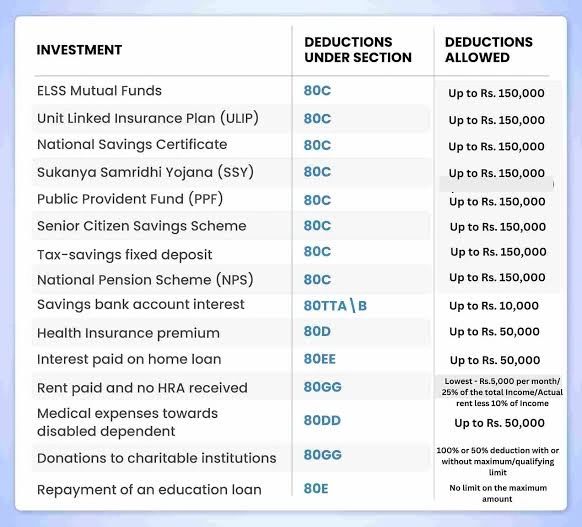
Donations to specified funds and institutions under Section 80G are deductible from taxable income — at 50% or 100% of the donation amount depending on the qualifying category, subject to a cap of 10% of adjusted gross total income for most categories. For HNIs with large one-time income events (property sale, business exit), a significant charitable donation in the same year can partially offset the income spike. Donations to the Prime Minister's National Relief Fund, CPCB, and certain other institutions qualify for 100% deduction without the income cap.
Business Structuring: LLP vs Company for Investment Holding
For families with significant investment portfolios, an investment holding LLP or company can consolidate management, create a vehicle for inter-family transfers, and in some cases reduce the effective tax rate on investment income. LLP profits distributed to partners are not subject to dividend distribution tax — partners are taxed at their applicable rates. Company-held investments are taxed at the corporate rate on gains, with dividends then taxed at shareholders' rates, creating double taxation — this makes the LLP structure preferable for pure investment holding in most cases.
For comprehensive NRI tax planning, DTAA advisory, and investment structuring, refer to NRI Tax Blueprint 2025 by CA Regi Tom Antony — available on Amazon. For NRI advisory resources, visit nriblueprint.com.
Regi Tom Antony And Associates provides advanced tax planning, investment structuring, and FEMA advisory for HNIs and NRIs. Contact: letstalk@rtaandassociates.com | Kakkanad, Kochi.